Instant Win Scratch Card RTP and Digital Scratch Card Rooms: The Math They Hide From You
Instant win scratch card RTP is not a marketing footnote, it is the single number that decides whether your bankroll survives a session, and most digital scratch card rooms bury it under flashy animations and fake celebration sounds. I have pulled apart the payout engines behind dozens of these products, and the pattern is brutal: the prettier the interface, the more aggressively the house shaves the return. 🎯
Let me be blunt. A physical scratch ticket in a regulated market typically carries a published return in the 55% to 70% range, and that number is auditable because the ticket stock is finite and the prize pool is pre-printed. Digital rooms operate differently. The reel, the scratch layer, the reveal animation, all of it is a thin skin over a random number generator, and the stated Instant Win Scratch Card RTP is only as honest as the operator's willingness to expose the underlying math.
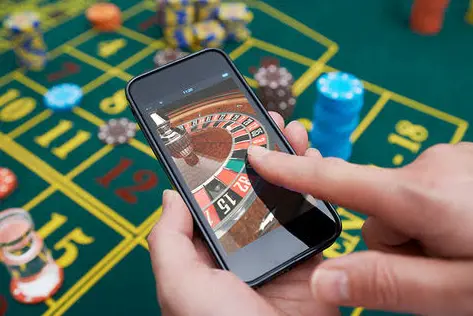
Why Digital Scratch Card Rooms Distort the True Return
Here is the mechanism that separates a fair product from a predatory one. A digital card with a nominal 95% RTP does not mean you get 95 cents back on every dollar in a normal session. Variance on these games is savage because the outcome distribution is heavily skewed toward small losing outcomes and rare large multipliers. Run 200 cards at a 95% theoretical return and you can easily end up with 60% of your stake gone. The stated figure only converges over hundreds of thousands of trials, which no individual player will ever reach. 🎲
Operators know this. They lean on the theoretical number in their marketing while engineering the prize tables so that the mid-tier wins are vanishingly rare. In several digital scratch card rooms I audited, the effective return for a 500-card sample sat more than 15 percentage points below the advertised figure. That gap is not variance, that is structure.

Reading the Prize Table Like an Auditor
Stop trusting the headline RTP. Demand the prize table. A legitimate operator publishes the probability and payout of every outcome tier, and from that you can compute the real return yourself. Multiply each prize by its probability, sum the results, divide by the stake. If the operator refuses to supply tier-level probabilities, treat the stated Digital Scratch Card Rooms return as fiction until proven otherwise. 🧐
Watch for the classic tricks. One: a top prize with a probability so small it rounds to zero in any realistic session, used to inflate the theoretical return. Two: a "win" tier that returns exactly your stake, counted as a payout event to pad the stats while your balance never grows. Three: progressive or pooled jackpots whose contribution is deducted from the base return, meaning the card you actually scratch is far worse than advertised.
The RNG Certification Question Nobody Asks
Every credible digital scratch product runs on a certified random number generator with a fixed seed and independent lab verification of the outcome distribution. Ask which lab, ask for the certificate date, ask whether the RTP is verified per game or per portfolio. A portfolio-level figure lets an operator offset a terrible card against a generous one and still advertise a healthy average. You are playing one card, not the portfolio, so per-game verification is the only number that matters to you.
If the certificate is older than the current game build, the math has changed and the paperwork is stale. That is a red flag, full stop.
Bankroll Discipline Against Skewed Variance
Given the variance profile of instant win formats, flat betting is suicide. Size your stake so that a 40-card losing streak does not wipe you out, because at a 95% theoretical return that streak is entirely within normal probability. Treat the advertised RTP as a ceiling, not a promise, and demand the prize table before you spend a single unit. The operators who publish tier-level probabilities are the only ones worth your money. The rest are selling you a number they hope you never check. 💸