Suited Tie Payout Mechanics and Low Limit Dragon Tiger Exploitation
The suited tie payout is the single most misunderstood line item on any Dragon Tiger table, and if you are grinding low limit Dragon Tiger without reverse-engineering its true return-to-player, you are donating edge to the house on a silver platter. Most casual players glance at the paytable, see a fat multiplier next to the tie bet, and assume the suited variant is a gift. It is not. It is a finely tuned trap, and the math behind it is brutal once you strip away the cosmetic odds presentation.
Decoding the Suited Tie Payout Structure
Standard Dragon Tiger pays a flat 8:1 on any tie, occasionally 11:1 on the suited tie depending on the operator's skin. That jump from 8 to 11 sounds generous until you run the combinatorics. A single-deck shoe gives you 52 cards; the probability of a perfect suited tie — both Dragon and Tiger landing the exact same rank and suit — collapses to roughly 0.16%. Multiply that against an 11:1 payout and the expected value still bleeds. In low limit Dragon Tiger environments, where the operator stacks the table with 8:1 unsuited ties and reserves the premium multiplier as bait, the suited tie payout is pure house juice dressed as a jackpot.
Here is the cold reality: on a six-deck shoe the suited tie probability drops even further per-round, yet the payout barely moves. That asymmetry is where the operator hides margin. Any player who treats the suited line as a value bet is mispricing variance as edge. 🎯
Why Low Limit Dragon Tiger Tables Warp the Payout
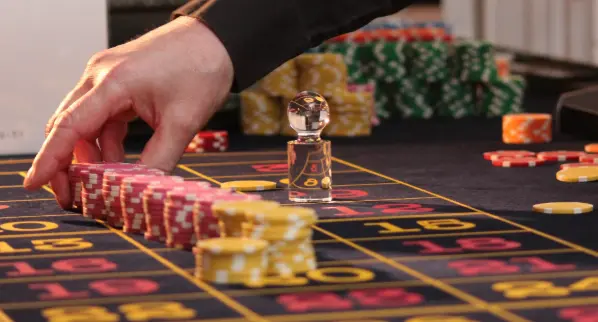
Low limit Dragon Tiger is a different animal entirely. When the table minimum sits at a couple of units, the operator cannot rely on whale volume to hit their hold target, so they lean hard on side-bet frequency. The low limit Dragon Tiger ecosystem is engineered to funnel action toward the tie and suited tie lines precisely because those carry the fattest theoretical hold. Watch the shuffle and the bet-spread caps: they are calibrated so the suited tie multiplier never gets enough exposure to threaten the house edge, while the small stakes keep players comfortably numb to the drain.
The payout curve on these tables is not random. It is a deliberate gradient where the base Dragon and Tiger bets offer near-coin-flip tension, and every rung up the side-bet ladder tightens the trap. If you are not mapping the actual card-composition odds against the posted multiplier, you are flying blind.

The Algorithmic Truth Behind the Multiplier
Strip the felt and the chip trays away and what remains is a payout function. The suited tie multiplier is a solved equation: probability of matched rank and suit divided into the posted return. On a fresh single deck, the honest fair-odds payout for a suited tie should clear north of 600:1 to be neutral. Operators post 11:1. That gap is not a rounding error; it is the entire business model of the side bet. 💰
Any serious auditor runs the same test: isolate the shoe composition, count the suited combinations, and compare against the posted line. When the multiplier fails to clear the combinatorial threshold, the line is dead money. The only defensible positions on low limit Dragon Tiger are the near-even base bets; everything wearing a premium multiplier is structurally rigged toward hold. The suited tie payout is the loudest example, and once you see the math, you cannot unsee it. 🃏
Track the deck penetration, log the suited-tie frequency across a thousand hands, and watch that 0.16% figure breathe in real time. The multiplier does not move. The cards do. That divergence is the entire exploit surface, and it closes the moment you stop counting.